The short list
Quick picks by travel problem
| Pick | Best for | Key signal |
|---|---|---|
| Anker Prime 100W | Best one-charger setup | 100W · 2 USB-C + 1 USB-A |
| EPICKA TA-105 | Best basic universal adapter | 200+ regions · 6 devices |
| Apple AirTag | Best luggage tracker for iPhone users | Find My · replaceable battery |
| AirFly Pro 2 | Best for seatback entertainment | 25+ hours · 2 headphones |
| Anker Nano 5K | Best pocket phone top-up | 5,000mAh · built-in USB-C |
We matched official specifications to five repeatable travel problems: charging, plug compatibility, bag tracking, in-flight audio, and day-long phone use. Rankings are based on practical fit—not sponsorship—and every pick includes a reason to skip it.
 Amazon · paid link ↗
Best one-charger setup
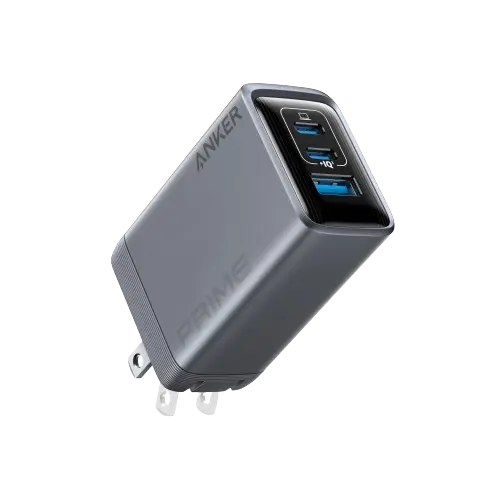
Anker Prime 100W Charger (3 Ports)
Solves: Replacing a laptop brick and multiple phone chargers
A compact three-port charger is the most useful upgrade for travelers carrying a USB-C laptop, phone, and one smaller device. The Anker Prime can deliver up to 100W from a single compatible USB-C port and accepts 100–240V input, so it can cover many laptop-and-phone kits with one wall brick.
It removes duplicate chargers and lets you build a cleaner charging routine at the hotel. Pair it with region-appropriate plug adaptation and cables rated for the power your laptop needs.
Skip it if you travel phone-only, or if every device you own already charges overnight from a low-power multiport plug. It changes plug shape only with a separate adapter.
Packing note: Bring one 100W-rated USB-C cable for the laptop and a shorter cable for the phone.
 Amazon · paid link ↗
Best basic universal adapter
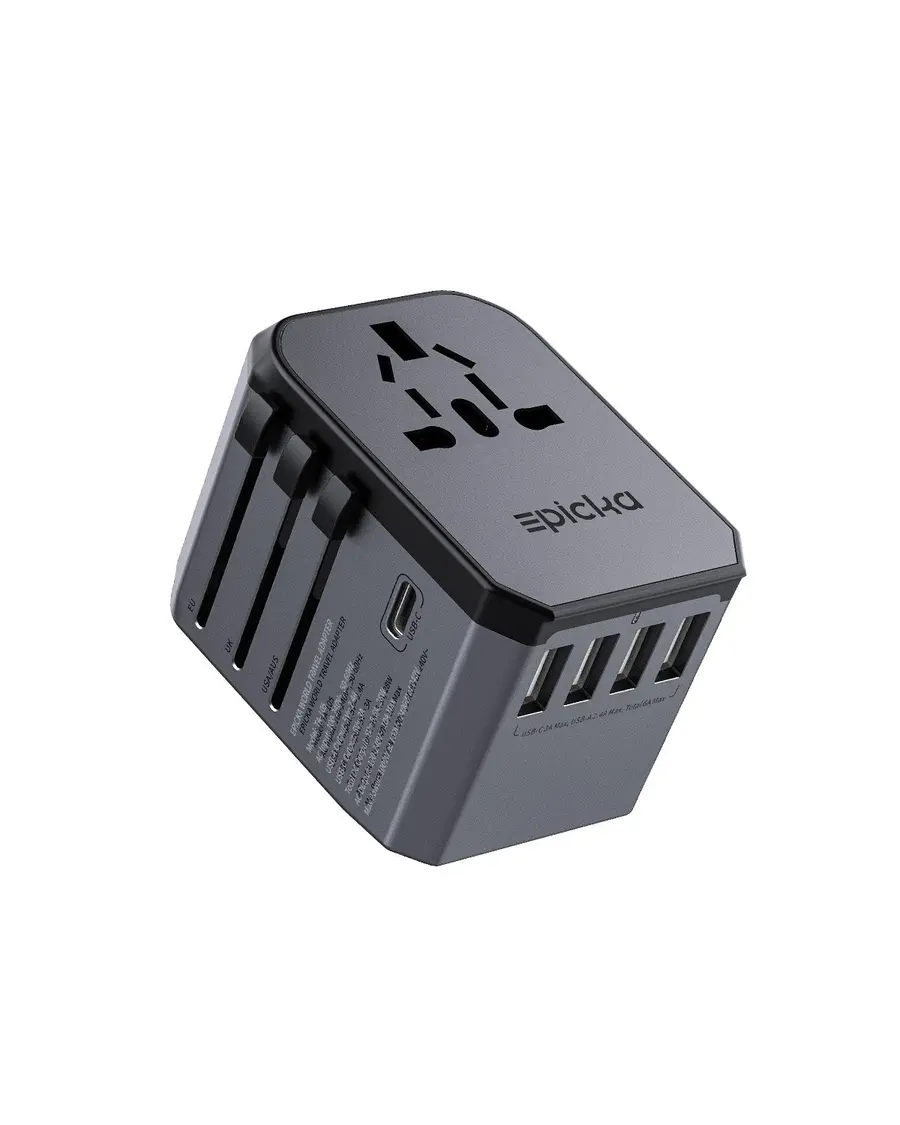
EPICKA TA-105 Universal Travel Adapter
Solves: Using one dual-voltage kit across several plug regions
The TA-105 combines four common plug formats, one universal AC socket, and multiple USB outputs in a compact body. EPICKA lists compatibility across more than 200 countries and regions and charging for up to six devices at once.
It is especially useful on multi-country routes where buying a separate plug for every stop creates clutter. Built-in shutters, a fuse, and a plug-lock system add practical safeguards.
This is an adapter, not a voltage converter. Skip it for single-voltage hair tools or appliances unless their label explicitly supports the destination voltage.
Packing note: Photograph the voltage label on every AC-powered device before deciding what goes in the bag.
 Amazon · paid link ↗
Best luggage tracker for iPhone users
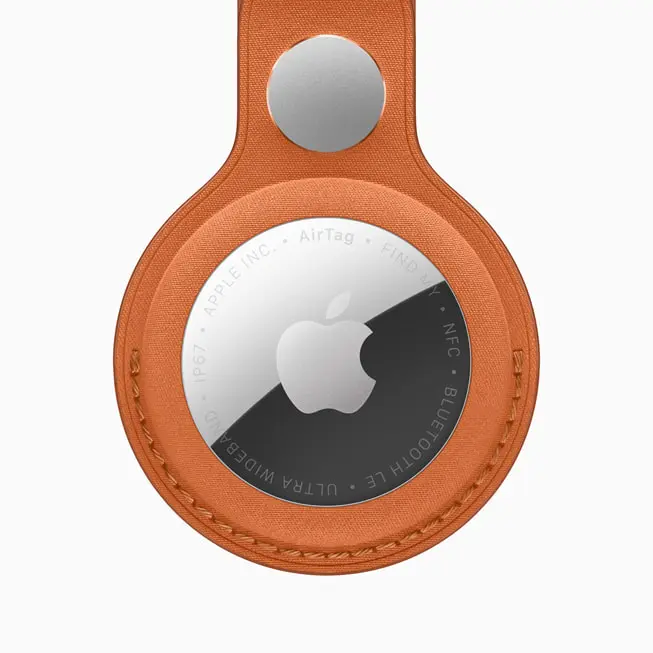
Apple AirTag (2nd generation)
Solves: Knowing whether a delayed bag reached the same airport
Apple's second-generation AirTag adds longer-range Precision Finding, a wider Bluetooth range, and a louder speaker while keeping the original form factor. Place one inside checked luggage—not dangling outside—to add another location signal when a bag goes missing.
The Find My network is the main advantage for iPhone travelers, and Share Item Location can help you provide location information to participating airlines when luggage is delayed.
Skip it if you do not use a compatible iPhone or iPad. A tracker does not replace the airline claim process, a luggage label, or essential medication in your personal item.
Packing note: Name each tag by bag and confirm its battery status before leaving home.
 Amazon · paid link ↗
Best for seatback entertainment
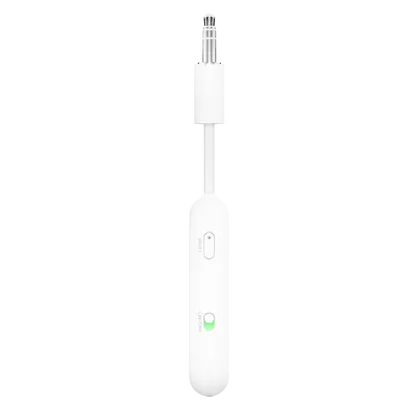
Twelve South AirFly Pro 2
Solves: Using Bluetooth headphones with a 3.5mm audio jack
The AirFly Pro 2 sends audio from a standard headphone jack to Bluetooth headphones. It supports two headphone pairs, has dedicated volume controls, and is rated for more than 25 hours of battery life with USB-C recharging.
It solves a very specific friction point: keeping your familiar wireless headphones for long flights instead of using disposable airline earbuds. Receiver mode also works with older car or speaker AUX inputs.
Skip it if your usual airlines stream entertainment to your phone, you already carry wired earbuds, or your route has no seatback screens.
Packing note: Pair it at home before the flight and keep a short wired backup in the same pouch.
 Amazon · paid link ↗
Best pocket phone top-up
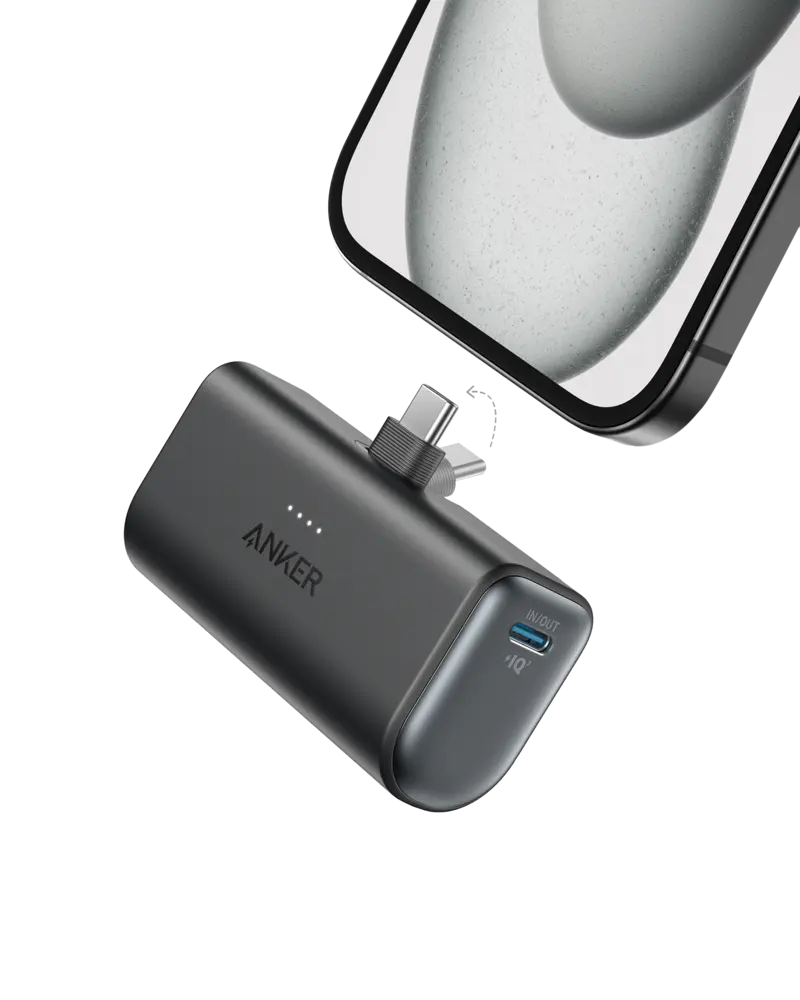
Anker Nano Power Bank 5K (A1653)
Solves: Getting through a maps-heavy travel day without a cable tangle
This small 5,000mAh power bank uses a foldable built-in USB-C connector and supports up to 22.5W output on a compatible device. It is designed for a useful phone top-up without the weight of a laptop-class battery.
It fits the actual failure point on sightseeing days: navigation, photos, translation, eSIM use, and ride-hailing drain a phone faster than a normal workday.
Skip it if you need multiple full phone charges, laptop power, or a connector that matches a Lightning-only phone without a cable.
Packing note: Airlines generally require spare lithium batteries and power banks to stay in carry-on baggage; confirm your carrier's current rules.
Common questions
Travel tech FAQ
What travel tech should I pack for an international trip?
Start with the failure points in your itinerary. Most travelers benefit from a compatible wall charger, the correct plug adapter, a phone power bank, and—when checking luggage—a tracker that works with their phone ecosystem. Add an in-flight Bluetooth adapter only when the route and airline make it useful.
Is a universal travel adapter the same as a voltage converter?
No. A plug adapter changes the physical plug connection. It does not necessarily change voltage. Check every device label for supported input voltage and use a suitable converter only when the manufacturer requires one.
Can power banks go in checked luggage?
Power banks use lithium batteries and are generally required in carry-on baggage, not checked baggage. Airline and government rules can change, so confirm the current policy for every carrier on your itinerary before departure.
How do I choose between a 5,000mAh and 10,000mAh power bank?
Choose 5,000mAh for a lighter emergency top-up and 10,000mAh when you expect long days, heavy camera or navigation use, or more than one device. Capacity, conversion losses, device battery size, and charging habits all affect the number of real-world charges.